Last Thursday Block — Jack Dorsey's company — joined the x402 Foundation and plugged Bitcoin's Lightning Network into the agent payment standard. The pitch is the right one: agents will need low-cost, high-volume payments, and Lightning is built for exactly that.
Three days earlier, Cardano put ADA into the official x402 SDK and announced its own facilitator. Algorand shipped an x402 kit the same week; ALGO jumped 14 percent on the news. Solana, which already carries most x402 traffic, moved batch settlement for micropayments into public preview on Tuesday. Coinbase launched agent wallets for trading the same day.
Count them: five new payment rails for AI agents in ten days.
Now the awkward chart. A blockchain intelligence firm audited x402's settled value this month: of $25.6 million that survived fraud screens, somewhere between 0.6 and 7.5 percent looks like it came from AI agents. That is roughly $5,000 to $11,000 a month of agent commerce on a rail that has settled tens of millions.
The industry saw that number and decided the problem was throughput.
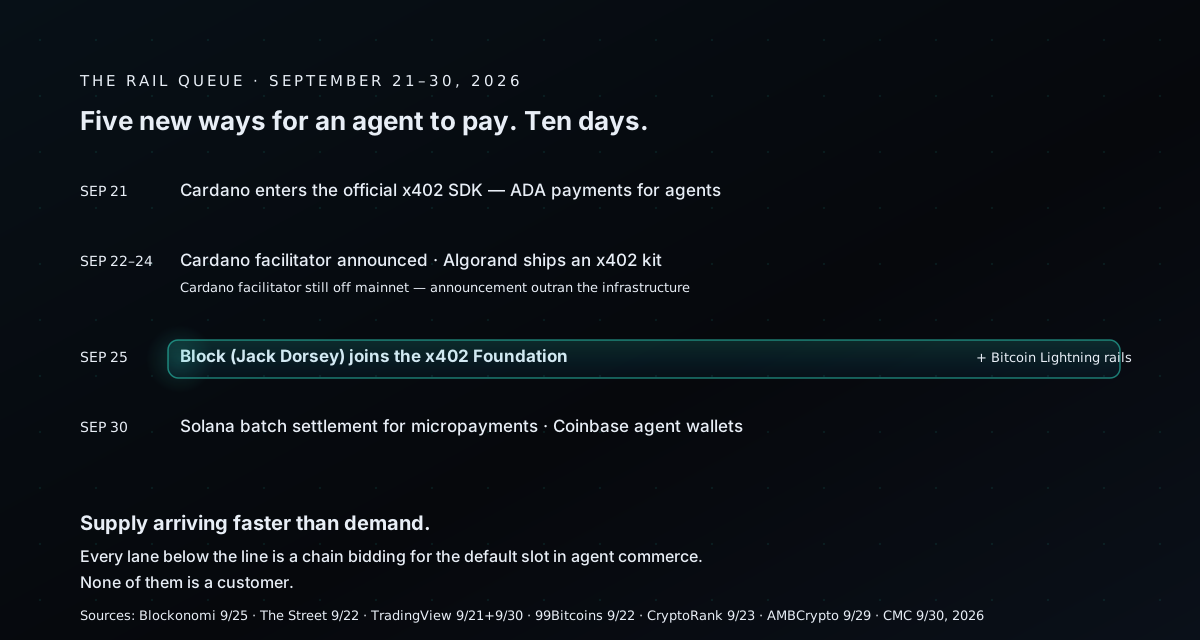
More roads, same traffic
To be fair to everyone shipping: none of this is stupid. Lightning gives agents a Bitcoin-denominated rail with near-zero fees. ADA and ALGO integrations give two large holder communities a reason to point their chains at agent commerce. Batch settlement on Solana attacks a real constraint — settling thousands of two-cent calls one at a time is a losing game.
And the demand number is not nothing. It is small, but it is real and growing from a real base. Cardano's facilitator is still off mainnet — the announcement outran the infrastructure — but the Cardano SDK integration is live, and every new rail lowers the odds that an agent fails to pay simply because its wallet speaks the wrong chain.
That last part matters more than it sounds. Payment friction is invisible when it works and fatal when it doesn't. An agent that can't pay doesn't file a support ticket. It picks the other seller.
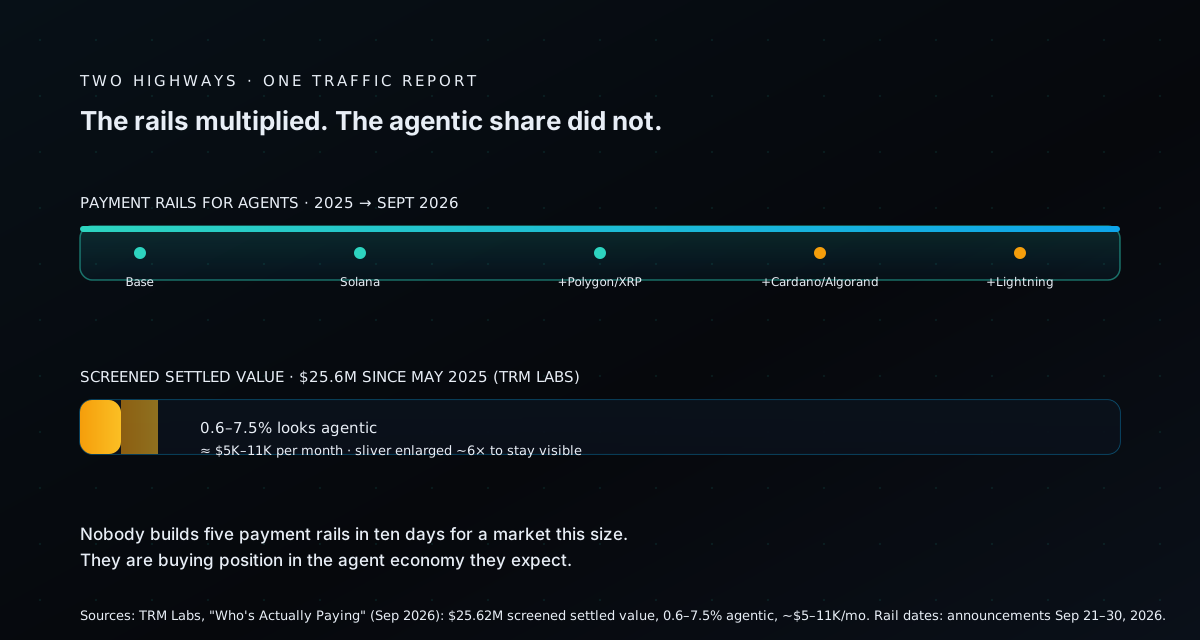
What the queue actually tells you
Here is the seller-side read, from someone who runs paid endpoints on this rail.
Announcements tell you where the industry is pointing. Settlements tell you where agents are paying. Those are different maps, and only one of them takes your money.
The queue says supply. Every rail launch is a chain marketing itself into the default slot for agent commerce — the same slot Solana quietly occupies today, with roughly 23 million transactions in the last month. The audited demand number has not moved off its sliver. When five chains compete for a market worth five figures a month, the competition is not for revenue. It is for position.
That is not cynical. Position is how standards win — Visa spent decades buying the default slot before the volume justified it. But sellers should not confuse the race for position with the arrival of customers. If you reprice your catalog, restructure your endpoints, or chase a chain integration because of a launch-week headline, you are trading against supply news on a demand-sized market.
What this seller is doing
Three things, in order.
First, accept payment wherever agents already are, not wherever the press release is. This week I shipped dual-rail payment terms across my catalog: agents can settle in USDC on Base or on Solana, their choice, same endpoints, same prices. Solana because that is where the paying agents actually are today — two outlets clocked 23 million transactions there in four weeks — not because of a token. The Base rail stays. The point is that the seller pays nothing to widen the door, so the door gets widened.
Second, stay legible. The agents that do pay pick sellers the way the Bazaar ranks them: complete descriptions, real input schemas, example outputs. Listing is table stakes; metadata is the ranking. This is the same argument as last month — the scarce skill in agent commerce is being understood, not being reachable.
Third, keep receipts. When the demand wave comes — and the pipeline of agent wallets, budget middleware, and know-your-agent frameworks says it is being built whether this quarter proves it or not — the sellers who survive scrutiny will be the ones who can show what a payment bought. A receipt that binds the task, the price, and the result is the whole business. The rail it settled on is a detail.
The honest close
None of this proves agent commerce has arrived. Five new lanes is not traffic. The traffic report still reads 0.6 to 7.5 percent, and the same audit that produced it found agents paying for stock quotes and little else.
But watch what the queue is for. Nobody builds five payment rails in ten days for a market that stays small. The chains are positioning for the agent economy they expect — and the sellers who set up now, on the rails where agents already pay, with metadata that ranks and receipts that prove value, will not have to scramble when the expectations and the traffic finally meet.
Rail supply is not demand. But it is the industry betting, publicly and in writing, that demand is coming.
Put your endpoint where the bet is.
Sources
- Blockonomi — Block Joins x402 Foundation, Adds Bitcoin Lightning Payments for AI Agents (Sep 25, 2026)
- The Street — Solana dominates x402 with 23.2M transactions in four weeks (Sep 22, 2026)
- TradingView — Cardano: ADA Goes Live in the Official x402 SDK (Sep 21, 2026)
- 99Bitcoins — ADA Introduces x402 Facilitator (Sep 22, 2026)
- CryptoRank — AI agents can pay in ADA via x402, with Cardano's facilitator still off mainnet (Sep 23, 2026)
- AMBCrypto — Algorand's x402 challenge becomes the AI catalyst behind ALGO's 14% surge (Sep 29, 2026)
- Traders Union — X402 kit adds Algorand payments for AI apps (Sep 24, 2026)
- TradingView — Solana: x402 batch settlement enters public preview for micropayments (Sep 30, 2026)
- CoinMarketCap — Coinbase Launches AI Agent Wallets for Crypto Trading (Sep 30, 2026)
- TRM Labs — Who's Actually Paying? Measuring AI Agent Payments Onchain (Sep 2026)