The report that said the quiet part
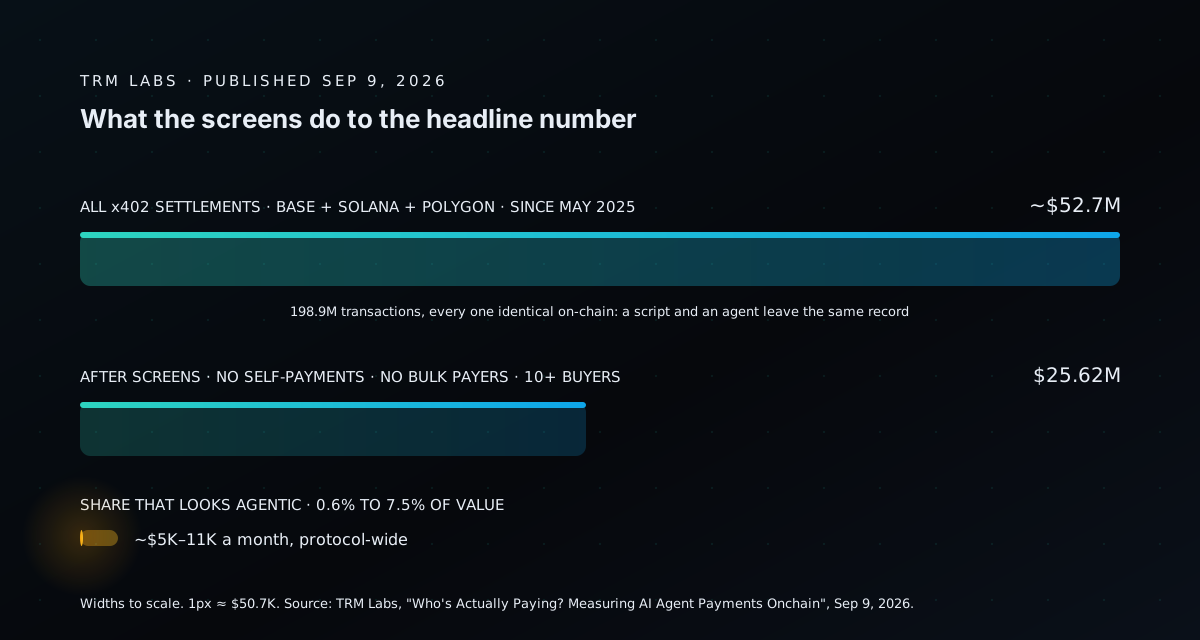
On September 9, TRM Labs published an analysis titled "Who's Actually Paying? Measuring AI Agent Payments Onchain." The firm took every settlement it could attribute to known x402 facilitators across Base, Solana, and Polygon since May 2025: about $52.7 million across 198.9 million transactions. Then it tried to separate commerce from noise.
The screens came first. Addresses paying themselves, out. Bulk flows dominated by one or two payers, out. Sellers with fewer than 10 distinct buyers, out. That cut the headline number to $25.62 million of likely commerce. Then two models estimated how much of the remainder looked agentic: a permissive one that counted any payer with small, varying amounts, and a strict one that also wanted months of sustained activity plus proof like registration in a public agent registry or payments to multiple sellers.
The range came back at 0.6 to 7.5 percent. Actual agent volume, by value, lands somewhere around $5,000 to $11,000 a month. Across the entire protocol.
Two details in the report deserve more attention than they got. First, USDC was 99.6 percent of settled value, so the stablecoin part of the story is settled. Second, TRM admits its own method probably undercounts. A single-purpose agent that buys the same cheap data feed every day looks exactly like a cron job on-chain, and the strict model throws it away. The honest reading is not "agents are fake." It is that agency is invisible on-chain, so anyone quoting you a headline transaction number for x402 is quoting mostly scripts.
Decrypt picked the report up on September 13, PYMNTS on September 15. The reactions split the way you would expect: infrastructure people kept building, and everyone waiting for proof of demand got more skeptical. Both camps are right, which is the problem.
The seller-side shape
I run a marketplace of paid x402 endpoints at agenttoll.dev, roughly a hundred routes selling market, OSINT, and security data by the call. Every route logs its own funnel. The counting is KV-based and approximate, reads and writes can race, and I would not audit a bank with it. But it sees every request.
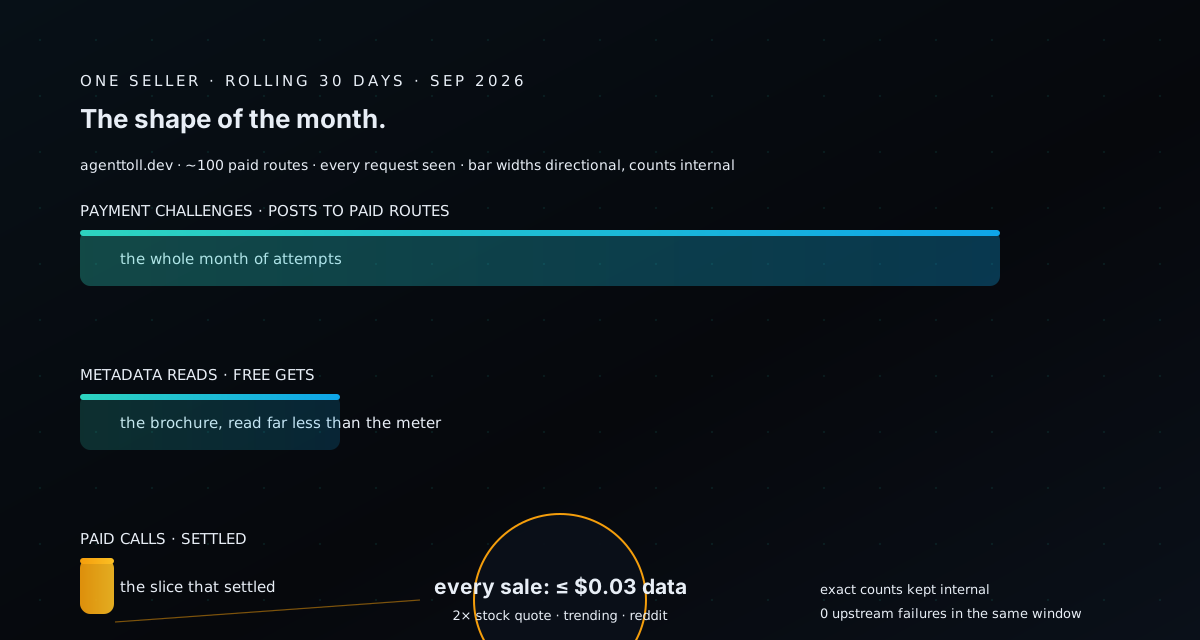
I am keeping the exact counts internal this time. What the month produced is a shape, and the shape is the argument.
Three things the shape shows. First, agents hit the paid POST endpoint several times for every single read of the free metadata about it. They skip the brochure and walk straight into the meter. Second, almost every challenge ends without a payment, lopsided enough that nobody gets to blame the plumbing. And third, the misses are not failures. Zero upstream failures in the window. When a buyer did sign, the facilitator verified, the chain settled, and the receipt went public. We walked that path in detail when we settled the first paid stock-quote call earlier this month. The rail is not the problem. Nobody is standing at the wall because the wall failed them. They stand there and decide the other side is not worth 3 cents yet.
The only things anyone bought
Every purchase this month went to the cheapest, most familiar endpoints we run.
| Route | Price | What it sells |
|---|---|---|
| /paid/finance/token-stock-quote | $0.03 | Live DEX quotes for tokenized stocks on Base |
| /paid/polymarket/trending | $0.02 | Trending prediction markets |
| /paid/social/reddit | $0.02 | Reddit search and sentiment |
| /paid/finance/token-stock-quote | $0.03 | Same stock endpoint, again |
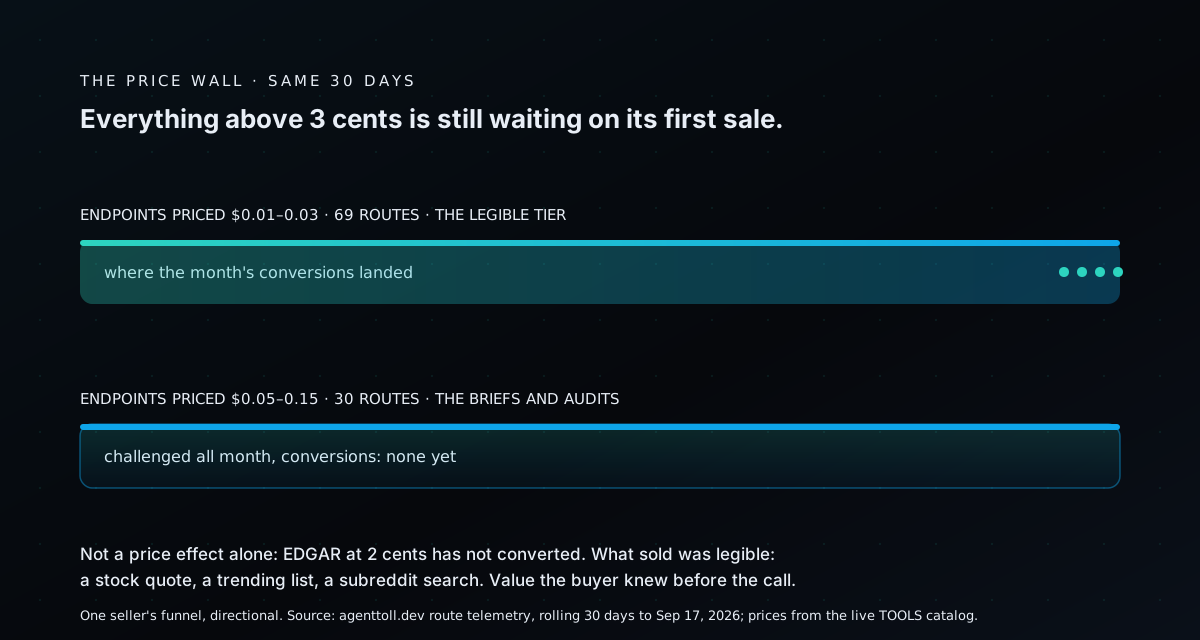
Split the catalog by price and the pattern gets clean. The endpoints priced at 3 cents or less are where the month's conversions landed. Everything above 3 cents, the briefs and audits at a nickel through fifteen, is still waiting on its first. Price alone does not explain that. Our EDGAR filings route costs 2 cents, cheaper than two of the products in the table, and it has not converted. What the winners share is that an agent already knows what the data is. A stock quote, a trending-markets list, a subreddit search: the value is legible before the call. The endpoints that have not converted are composites, briefs and audits that need judgment to price, and those are exactly the products where the buyer has to trust the seller before the first call.
That matches what the space has been saying since August. The scarce layer is not payment, it is deciding what deserves a payment. Agents vote with the only currency they have: they buy what they already understand, priced like a snack.
There is outside evidence the lane is real. A dedicated competitor, x402stock, sells market data through the same protocol with the same no-accounts pitch. Our stock-quote route took more meter hits than any other route we run this month. Two sellers spending a month getting hammered on the same endpoint is a strange kind of validation, but it is validation.
The rest of the tape
The week the TRM report landed, three other stories moved the same direction.
Solana took over the protocol's volume. It passed Base in daily x402 transactions on August 25 for the first time in six months and now holds roughly 70 percent of monthly volume, about $24 million over 30 days. Cardano Foundation engineers contributed a native implementation to the official x402 codebase on September 14. Stellar published its x402 integration docs on September 8. Algorand is running a $100,000 challenge for pay-per-use APIs. The multichain future of the standard is not being debated anymore, it is being shipped.
Coinbase opened Agentic.market on September 4, a storefront where people browse x402 services and agents discover them programmatically, each agent carrying its own wallet to buy and sell. More shelves for the same store problem.
And the identity layer showed up. Visa, Mastercard, and Ant International announced a Know Your Agent interoperability framework on September 10 through the MAS-convened BuildFin.ai platform. ERC-8004 agent registries have been live on mainnet since February, and a community tracker counts over half a million registered agents. TRM used registry registration as one of its strict signals, and rarity is the point: registration is voluntary, so the agents that register are the ones that want to be found.
The fix list is the product roadmap
TRM closes with three needs: accurate agent registration, counterparty reputation an agent can check on its own, and monitoring built for volume rather than value. Strip the compliance framing and that is a seller's roadmap.
Registration exists. If you sell to agents and you are not registered under ERC-8004, you are invisible to the strictest buyers. Reputation is receipts. We serve a public verifier for every settled transaction, payment details and payload, and it costs nothing per read because verified receipts are immutable and cache forever. Monitoring for volume is what our funnel counters already are: per-route, per-day, counting requests instead of dollars, built on a KV write that costs $0.
And for pricing, the month gave a clean rule of thumb. Agents pay under a nickel for data whose value they knew before the call. If your first product needs the buyer to trust you, it will sit behind the wall no matter what it costs. Sell the legible thing first. Let the receipts argue for the composites.
Where this goes
The infrastructure conviction and the paid demand are now on the record from both sides, and they do not match yet. That is not a scandal, it is a 1990s-e-commerce gap. The rails being done before the shopping was normal is how this pattern always goes.
What closes it is boring. Sellers pricing first calls like a pack of gum. Registries making agents findable so good buyers stop looking like cron jobs. Storefronts curating instead of listing. The protocols did their part; the HTTP 402 status code has never worked this hard in its life. The rest is on us, the people leaving the meters on.
Sources
- TRM Labs: Who's Actually Paying? Measuring AI Agent Payments Onchain
- Decrypt: AI Agents Spending Money Online? New Research Says Otherwise
- PYMNTS: Agentic Payments Are Growing, but Most x402 Payments Aren't From AI Agents
- Crypto Briefing: Solana commands ~70% market share in x402 activity
- Cryptorank: Cardano officially becomes part of x402 codebase
- Stellar Docs: x402 on Stellar
- CoinMarketCap: Coinbase x402 Launches AI Agent App Store
- Reuters: Visa, Mastercard and Ant International team up on AI agent trust framework
- Mastercard: Agent Connect launch
- Forbes: AI Agents Gain Trust Via Ethereum, ERC-8004 on Mainnet
- Agent Economy: ERC-8004 registry tracker
- x402stock: market data API for AI agents
- AgentToll route observations, rolling 30 days ending September 17, 2026. First-party funnel telemetry from our own KV store; exact counts kept internal, shape and conversion pattern only.